
Negura istoriei ne pomenește de ”dreptul primului născut”. Avem referiri biblice privind dreptul primului născut preluate mai apoi de dinastiile încoronate, acest drept se aplică și în prezent în cadrul caselor regale. Dreptul primului născut vine cu avantaje dar și îndatoriri, primul născut moștenește marea parte a averii cât și poziția tatălui, dacă acesta este împărat sau rege, primul născut îl va urma pe tron.
Dacă primul născut își îndeplinește cu onoare și mândrie rolul atunci acesta este slăvit, cântat și onorat de posteritate, dacă nu se ridică la nivelul așteptărilor, acesta cade în uitare.
Am recurs la acest prolog pentru a mă face mai bine înțeles în demersul ce urmează a fi expus.
Istoria industrială a acestei umanități are anumite repere remarcabile ce au reprezentat adevărate salturi în dezvoltarea și bunăstarea speciei umane. Un astfel de reper este și descoperirea și folosirea pe scară industrială a sudurilor metalelor. Umanitatea nu își poate concepe existența fără această descoperire, această activitate a atins cote deosebite de dezvoltare, astăzi sudăm metalele sub valurile mărilor și oceanelor, avem roboți care realizează o producție și precizie deosebită a îmbinărilor prin sudare. Dar până la acest moment a fost și faza de pionierat au fost și eșecuri.
Industria reșițeană a marcat această fază de pionierat prin construirea Primului pod sudat arcuit din România și Al Doilea pod sudat din lume. Primul pod complet sudat este Maurzyce Bridge, construit în Polonia între 1928 și 1929 urmat de Podul de la Stavila din Reșița, județul Caraș-Severin, România, construit peste râul Bârzava și inaugurat la 17 decembrie 1931, doi ani mai târziu decât podul polonez.
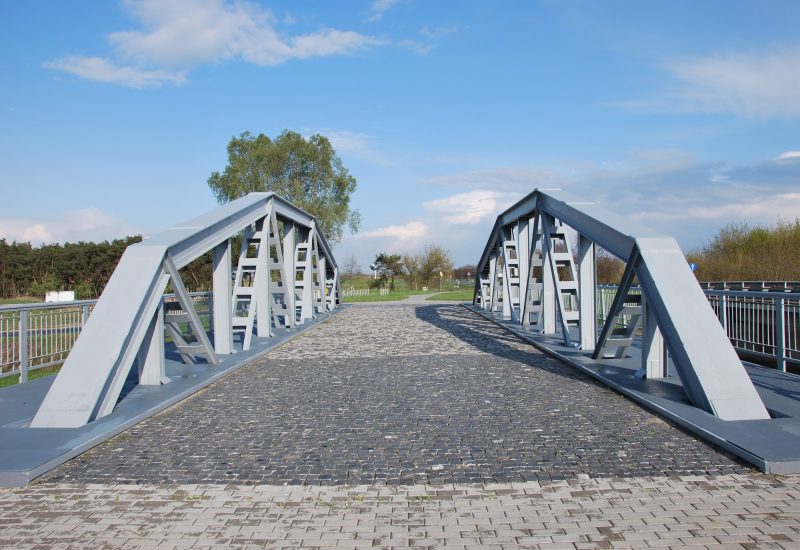
Maurzyce Bridge, Polonia
Șase ani mai târziu se construia Al doilea pod sudat din România, în 1937, tot la Reșița, în actuala zonă a Centrului civic de către aceiași entitate industrială ce a purtat diverse denumiri de-a lungul istoriei sale, Întreprinderile statului austriac, StEG, UDR, Combinatul Metalurgic Reșița, UCMR – Uzina Constructoare de Mașini Reșița și Combinatul Siderurgic Reșița – CSR.
Dacă acest pod se bucură de atenție, fiind într-o stare agreabilă, Primul pod sudat, construit la Stavila își face rolul (este funcțional, deservind atât auto și pietonal) într-un anonimat revoltător. Aflat într-o stare inestetică, nimic nu amintește de importanța sa, de măreția acestor locuri ce mustesc de glorie.
Această situație se poate corecta și DREPTUL PRIMULUI NĂSCUT trebuie să fie recunoscut!
Reclam DREPTUL PRIMULUI NĂSCUT pentru podul din Stavila, Municipiul Reșița!
Solicit celor două entități, dacă se consideră urmașe ale măreției industriale din acest sanctuar al industriei românești și europene, Uzina Constructoare de Mașini Hidroenergetice Reșița respectiv Artrom Steel Tubes Reșița, să inițieze activități de reabilitare a Primului pod sudat arcuit din România.
Revendicați și solicitați dreptul vostru în istorie, redați DREPTUL PRIMULUI NĂSCUT, redați măreția acestui obiectiv, faceți ca acesta să fie ”slăvit, cântat și onorat de posteritate”. Creați premisele ca acest loc peste Bârzava din Stavila, Municipiul Reșița să devină o Mecca a specialiștilor în sudură, a curioșilor de istorie industrială din întreaga Europă, care vor dori să vină să vadă suduri realizate la începutul secolului XX, care vor dori să se întâlnească și să vorbească despre pasiunea lor, sudura metalelor, care vor dori poate să controleze nedistructiv sudurile acelor vremuri…
Umbra măreției acestor locuri încă ne bântuie… Reșița civilizatoarea industrială a României.
Engelbert Remus Potocean
Reșița, 16.08.2026
Drepturi de autor
Sursa coloanei sonore: YouTube, Intergalactic – Alex Jones _ Xander Jones
The mists of history speak to us of the „right of the firstborn.” There are biblical references to this right—later adopted by crowned dynasties—that remain applicable within royal houses to this day. The right of the firstborn entails both advantages and obligations: the firstborn inherits the bulk of the estate as well as the father’s position; should the father be an emperor or a king, the firstborn succeeds him on the throne.
If the firstborn fulfills this role with honor and pride, they are celebrated, immortalized in song, and honored by posterity; if they fail to meet expectations, they fade into oblivion.
I have included this prologue to better clarify the argument that follows.
The industrial history of humanity is marked by remarkable milestones that represented true leaps forward in the development and well-being of the human species. One such milestone is the discovery and industrial-scale application of metal welding. Humanity cannot conceive of its existence without this discovery; the practice has reached extraordinary levels of sophistication—today, we weld metals beneath the waves of seas and oceans, and robots achieve exceptional precision and output in creating welded joints. Yet, before reaching this stage, there was a pioneering phase—and there were failures along the way.
The industry in Reșița played a pivotal role in this pioneering era by constructing Romania’s first welded arch bridge—and the second welded bridge in the world. The first fully welded bridge is the Maurzyce Bridge, built in Poland between 1928 and 1929, followed by the Stavila Bridge in Reșița, Caraș-Severin County, Romania—built over the Bârzava River and inaugurated on December 17, 1931, two years after the Polish bridge.
Maurzyce Bridge, Poland
Six years later—in 1937—Romania’s second welded bridge was built, also in Reșița (in the area now known as the Civic Center), by the same industrial entity that has borne various names throughout its history: the Austrian State Railways (StEG), UDR, the Reșița Metallurgical Complex, UCMR (Reșița Machine Building Plant), and the Reșița Steel Complex (CSR).
While the second bridge attracts attention and remains in good condition, the *first* welded bridge—built at Stavila—performs its function (serving both vehicular and pedestrian traffic) in a state of appalling obscurity. Visually unsightly, nothing about it hints at its significance or the grandeur of a place steeped in such glorious history.
This situation can be rectified, and the „Right of the Firstborn” must be acknowledged!
I assert the „Right of the Firstborn” for the bridge at Stavila, in the Municipality of Reșița!
I call upon two entities—Uzina Constructoare de Mașini Hidroenergetice Reșița (Reșița Hydro-Energy Machinery Plant) and Artrom Steel Tubes Reșița—to initiate the rehabilitation of Romania’s first welded arch bridge, provided they view themselves as heirs to the industrial greatness of this sanctuary of Romanian and European industry.
Claim and assert your place in history; restore the „Right of the Firstborn”; restore the grandeur of this landmark; ensure it is „celebrated, sung of, and honored by posterity.” Lay the groundwork for this site over the Bârzava River in Stavila—part of the Municipality of Reșița—to become a Mecca for welding specialists and industrial history enthusiasts from across Europe: people who will want to see welds created in the early 20th century, to meet and discuss their passion for metal welding, and perhaps even to perform non-destructive testing on the welds of that era…
The shadow of this place’s former greatness still lingers… Reșița, the industrial civilizer of Romania.
Engelbert Remus Potocean
Reșița, August 16, 2026
Copyright